
What the F1 2026 Rule Changes Teach Us About Support Engineering
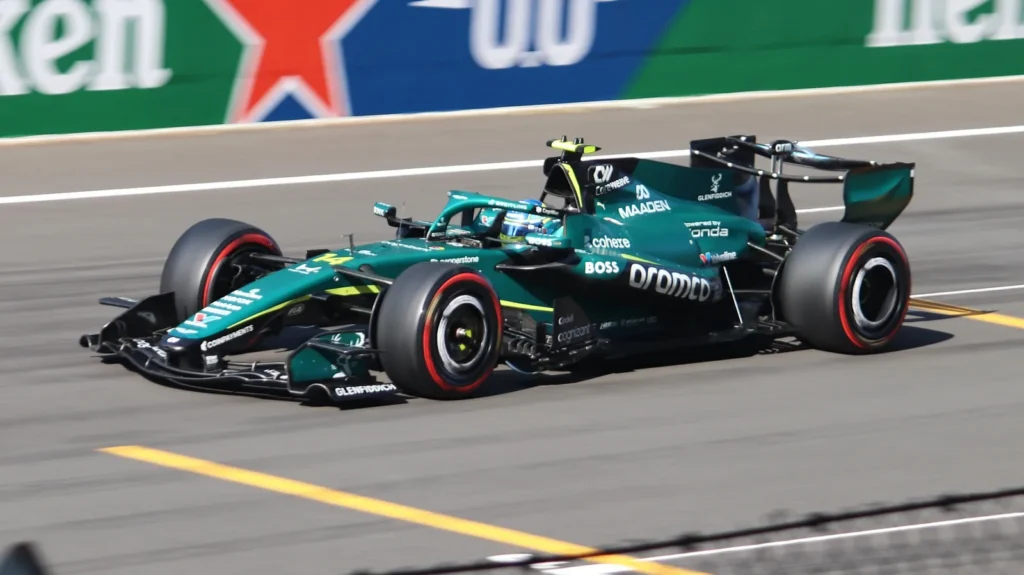
At Quorum, we love Formula 1; in fact, we love everything Engineering. That said, Formula 1 has always been a sport of small margins. A tenth of a second, a late pit stop or a minor fault can decide the outcome of a race. In 2026, those margins are being tested in a very different way.
The new Formula 1 rules have changed the cars, the power units, the fuel, the aerodynamics and the size of the grid. For fans, this means a new era of racing. For those of us who work in Support Engineering, it means something else too: a clear lesson in what happens when complex systems change at pace.
At Quorum, we look at the 2026 season and see more than a sporting reset. We see the same pressures faced in Defence, Rail, Energy, Infrastructure and other high-value Engineering programmes. New designs are exciting, but they also bring fresh risk. The real test is not only whether a system can perform. It is whether it can continue to perform safely and reliably under real operating pressure.
The 2026 Formula 1 Regulations: A New Test for Complex Engineering
The 2026 Formula 1 regulations were designed around a smaller, lighter and more agile car. The wheelbase has been reduced, the cars are narrower and the minimum weight has been cut. Formula 1 has also moved toward lower drag and reduced downforce, with the aim of creating cars that are more efficient and more ‘raceable’.
On paper, that sounds like a clean Engineering goal. Reduce weight, reduce drag, improve efficiency and let the drivers race. In practice, every one of those changes affects how the rest of the system behaves. A lighter car may place different loads through the chassis. A new aero profile may change cooling needs. A smaller package may make access, repair and heat control harder.
That is where Support Engineering becomes vital. Major design change cannot be treated as a design-only issue. The support case has to move with it. Maintenance Access, Spares, Fault Diagnosis, Training, Technical Documentation and repair routes all need to be thought through before the system is pushed into service.
Before looking at the Support Engineering lessons behind the 2026 rule changes, this FIA video gives a clear overview of the new cars, Power Units and technical direction.
Active Aerodynamics and the Challenge of System Integration
One of the biggest changes for 2026 is the move away from standard DRS toward active aerodynamics. Formula 1’s new approach uses movable front and rear wings, with different aero states for straights and corners. These are commonly described through X Mode and Z Mode.
This is a good example of System Integration risk. The car is no longer just relying on a fixed aero design and one rear-wing device. Aero behaviour now links more closely with power delivery, driver input, software, tyre load and race strategy. A fault may not look like one broken part. It may show up as poor balance, lost speed, higher wear or a system that works in one condition but not another.
That is a familiar issue in complex Engineering. The hardest failures are often not isolated. They sit between systems, teams and assumptions. Good Integration, early FMECA and clear Supportability Analysis help find those risks before they appear in service.
New Teams Join The F1 Grid
The 2026 season also brings new manufacturer dynamics. Audi has entered Formula 1 through the Sauber team, which is now the first Audi works squad. Cadillac has also received final approval to join the grid as the 11th team, backed by General Motors and TWG Motorsports.
New teams bring new skills, new facilities and new ideas. They also bring huge Support Planning demands. Every part needs a supply route. Every fault needs a response. Every update needs to be built, shipped, tested and understood. In Formula 1, this happens across a global race calendar, with tight timeframes and little room for error.
The same is true in many Engineering programmes. A new asset does not become ready because the core design is complete. It becomes ready when the wider support system can keep it available.
The 2026 Power Unit: A High-Stakes Test of Hybrid Reliability
The power unit change is one of the clearest Reliability stories of 2026. Formula 1 has removed the MGU-H and increased the role of the MGU-K, with electric power rising from 120kW to 350kW. The result is a much greater split between combustion and electric power than previous hybrid rules.
This shift creates a very different support challenge. It is not enough for the internal combustion engine to be strong. The battery, energy recovery, control software, thermal systems and electrical hardware all have to work as one. The power unit is now judged as a full system, not a set of parts.
For us, this is where Reliability & Maintainability thinking becomes central. A high-output hybrid system needs clear Failure Modes, known limits, planned inspection points and a realistic view of how parts behave under stress. The question is not simply “does it work?” The better question is “how does it fail, how early can we detect it and what is the support plan when it does?”
Battery Strain, Cooling and Energy Recovery
Tripling the electric output places far more pressure on battery performance, cooling and energy recovery. Heat, vibration and charge cycling all become critical. A small issue in thermal control or structural mounting can quickly become a major Reliability problem.
This is why testing and simulation have to reflect real use. Track running, like field use in Defence or other sectors, exposes things that models can miss. Loads change. Temperatures rise. Drivers use systems in different ways. Parts sit close together. A component that looks sound in isolation may struggle when fitted into a live system.
Good Support Engineering asks these questions early. What are the likely stress points? What will be monitored? What spares are critical? What data will tell us a part is degrading? How quickly can we replace it? These are not afterthoughts. They are part of making the system viable.
Sustainable Fuel and Combustion Consistency
From 2026, Formula 1 is also using Advanced Sustainable Fuels. Formula 1 describes these as drop-in fuels designed to replace fossil fuel while working with combustion engines. The fuel change runs alongside the new power units and forms part of the sport’s push toward its Net Zero target.
For teams, fuel is not just a green story. It is another variable in a highly tuned system. Combustion behaviour, energy density, fuel blend and engine calibration all matter. If those areas are not controlled, the result can be lost power, wear, knocking or poor consistency across race conditions.
In wider Engineering terms, this is a change control issue. When a core input changes, the Support Case must change too. Operating limits, test evidence, documentation and maintenance assumptions all need to be checked. A new fuel, material, supplier or software build can have effects far beyond the item itself.
Early 2026 Examples: When the System Is Not Ready
Early races under new rules often reveal gaps. That does not mean teams have failed. It means real operating conditions are doing what they always do: testing the full system.
In March 2026, Motorsport.com reported that Aston Martin had lost two batteries during Free Practice 1 at the Australian Grand Prix, with vibration problems linked to Honda’s powertrain. The team was left with only the two batteries fitted to the cars, making further failure a major risk for the weekend.
From a Support Engineering point of view, the lesson is stark. Critical Spares Planning is not a spreadsheet task. It is a risk control. If vibration, load or heat can remove key parts faster than expected, Supply Support Planning and FMECA need to account for it. Losing critical inventory at the start of an operating cycle puts the whole mission at risk.
Max Verstappen and Red Bull, the Fragility of Cooling-Dependent Systems
Max Verstappen’s Chinese Grand Prix showed how quickly a recoverable race can turn into a retirement when a support-critical system fails. After a difficult start and a race spent recovering through the field, Verstappen was running in sixth before Red Bull had to retire the car with ERS cooling issues. Formula 1 reported that Verstappen completed 45 laps before the technical retirement, while PlanetF1 later reported Red Bull’s explanation as an ERS coolant fault.
From a Support Engineering point of view, this is a strong example of how thermal management sits at the heart of Reliability. Cooling is not just a background function. In a high-output hybrid system, it protects performance, safety and Availability. If cooling margins are not understood, monitored and supported, the asset may still move, but its mission is already at risk.
Fernando Alonso and the Human Cost of Vibration
At first glance, Fernando Alonso’s early 2026 vibration issue may seem like a Human Factors problem. If the driver is left numb after 20 to 25 minutes of running, the link to operator comfort and control is clear. But the deeper lesson is wider than that. Severe vibration can damage hardware, reduce driver confidence, shorten component life and make the system harder to operate safely over a full race distance.
That makes it a Support Engineering issue as much as a driver issue. A high-performance system does not only need to function in short bursts. It needs to remain usable, safe and reliable under real operating loads. In this case, vibration was not just felt by the driver. It was also linked to wider Reliability concerns, including parts being shaken loose and limited running before the season had properly begun.
For complex programmes, the lesson is clear. Human Factors Integration, FMECA, Supportability Analysis and Supply Support Planning should not sit in separate boxes. They need to work together. When vibration affects the operator, the hardware, the test plan and the available spares, the whole support case is being tested.
Alpine and Managed Degradation
The 2026 season has also shown how teams may choose to operate below peak performance to protect the wider mission. Alpine had likened its early-season high-speed handling issue to “carrying an injury” while it worked on upgrades to fix the problem
That phrase will make sense to many Engineers. In service, there are times when an asset remains usable, but only within tighter limits. It may be speed-limited, load-limited or operated with extra checks. The aim is not to get maximum output. The aim is to preserve Availability and avoid full failure while a fix is planned.
This is where the balance between performance and readiness matters. Running in a degraded state is sometimes the right call, but it must be managed. Teams need clear limits, known risks, good data and a plan to return the system to full capability.
What Complex Engineering Programmes Can Learn from F1
For us, the 2026 Formula 1 season is a useful reminder that support must be designed in early. It cannot be patched on later.
- Test the support case early
- Plan critical spares
- Check real failure modes
- Link software and hardware
- Manage degraded states
- Keep data usable
These points apply to Formula 1 cars, but they also apply to Defence assets, rail systems, energy projects, infrastructure and any other setting where performance, safety and Availability have to work together.
If you are looking to strengthen your team’s capability, align training with delivery goals, or simply create a more confident, cohesive workforce we can help.


