
Leadership Gaps Between Design and Operations Teams
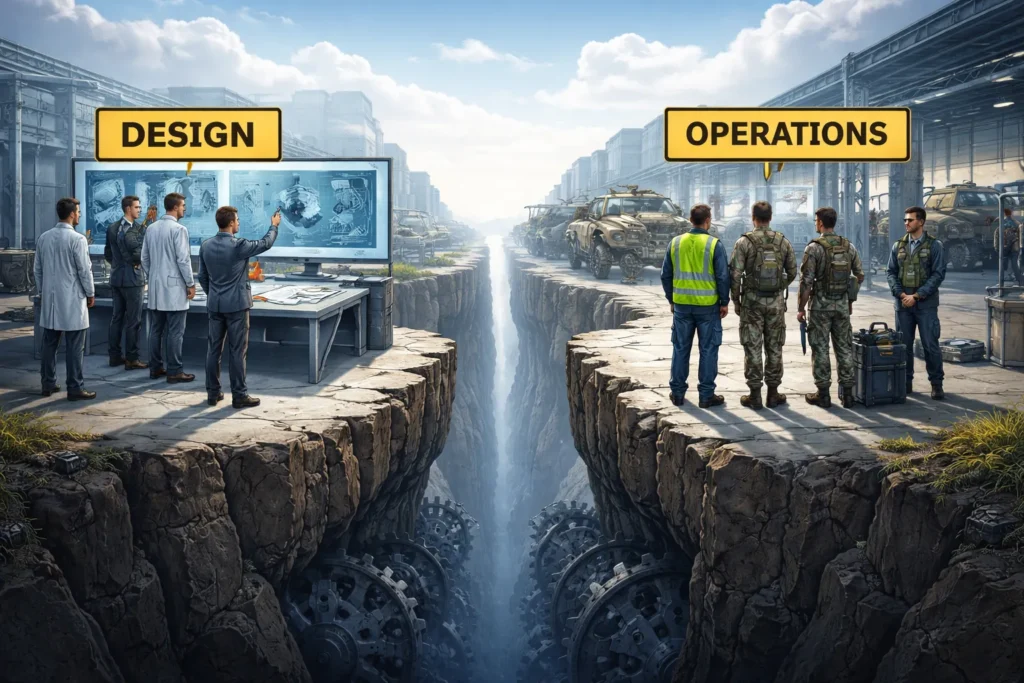
Complex engineering programmes move through many stages before equipment reaches service. Design Teams shape the architecture, performance and technical solutions. Operations Teams then carry the responsibility of keeping that equipment running for years, often decades.
Both groups play a key role. Yet they work with different pressures and priorities. Without strong leadership connecting them early, design decisions can create Support challenges once systems enter service. The gap is not about capability. It is about perspective.
Different Priorities Shape Different Decisions
Design Teams focus on performance, integration and meeting programme milestones. Their work centres on delivering a system that satisfies technical requirements and passes reviews.
Operations Teams focus on Availability, Reliability and Maintainability and day-to-day support. Their attention is on Maintenance tasks, spare parts, Technical Documentation and Training.
These priorities shape how each team sees the same system.
A design engineer might focus on achieving the best technical configuration. A technician might focus on how quickly a failed component can be replaced. Both perspectives are valid, yet they lead to different questions during development.
When those questions appear early in a programme, they guide better decisions. When they appear later, they reveal problems that are difficult to fix.
Support Challenges Often Begin in Design
Many Support issues begin with small design choices. Component placement affects access during Maintenance. The layout of equipment influences how Support and Test Equipment can be used. Software architecture affects fault diagnosis and repair time.
These details rarely attract attention during early design reviews. Performance, safety and integration tend to dominate discussions.
Once systems enter service, the practical implications become clear. Maintenance tasks take longer than expected. Spare parts planning becomes uncertain. Training requirements expand as technicians adapt to complex procedures.
A technician faced with a difficult replacement task may quietly wonder whether the original designer had ever held a spanner. In fairness, designers often wonder whether technicians have seen the inside of a design review meeting.
Both sides usually mean well.
Common Signs of the Gap
When Design and Operations drift apart, certain patterns appear across programmes.
Typical examples include:
- Components placed where access is restricted
- Maintenance tasks requiring extensive disassembly
- Support and Test Equipment not aligned with real faults
- Technical Documentation that does not reflect workshop practice
- Spare parts planning based on optimistic assumptions
None of these issues appear dramatic on their own. Over time they affect Maintenance workload, Availability and Whole Life Cost.
In Defence environments the impact is even greater. Equipment must operate in demanding conditions and remain in service for decades. Support systems need to work just as reliably as the equipment itself.
Leadership Connects Engineering and Operations
Bridging the gap requires leadership that encourages collaboration across engineering disciplines.
Programme leaders set the tone. When Support Engineering sits alongside Design Engineering during development, practical questions appear earlier in the process.
Engineers begin to consider Maintainability, Reliability and access during normal design discussions. Maintenance Planning and Supply Support influence decisions about layout and configuration.
These conversations are rarely dramatic. They often revolve around three simple questions.
- How will this component be replaced?
- How long should the task take?
- What tools will technicians need?
Clear answers help teams design systems that perform well in service as well as during trials.
Integrated Logistic Support Brings Structure
Integrated Logistic Support provides the framework that links Design and Operations. It introduces structured analysis that examines how systems will be supported throughout their life.
Key activities include:
- Reliability and Maintainability analysis
- Maintenance Planning
- Supply Support
- Technical Documentation
- Training and Training Equipment
- Support and Test Equipment
These activities run alongside engineering development rather than following it.
The result is more balanced decision making. Performance remains important, yet Supportability becomes part of the design conversation. Equipment enters service with realistic Maintenance strategies and Support structures already in place.
Engineers often enjoy elegant technical solutions. Operators usually prefer solutions that can be maintained quickly with the tools available. Integrated Logistic Support helps both priorities work together.
Why Choose Quorum for Integrated Logistic Support
At Quorum, we help organisations bring Design Teams and Operations Teams together during the engineering process.
Our specialists work alongside engineering programmes to ensure that Maintainability, Reliability and Supportability influence decisions from the earliest stages of development. This approach supports practical engineering solutions that perform effectively throughout the system lifecycle.
By integrating Integrated Logistic Support into programme planning, we help teams reduce risk, manage Whole Life Cost and maintain high levels of Availability.
Complex systems succeed when engineering performance and Support planning move in the same direction.
That connection begins long before equipment enters service.
Book an informal chat with Shaun for a free consultation and discover how ILS can propel your operational efficiency and cost-effectiveness to new heights.
Your support engineering insights…


