
COTS in Defence: Can You Support It for 15 Years?
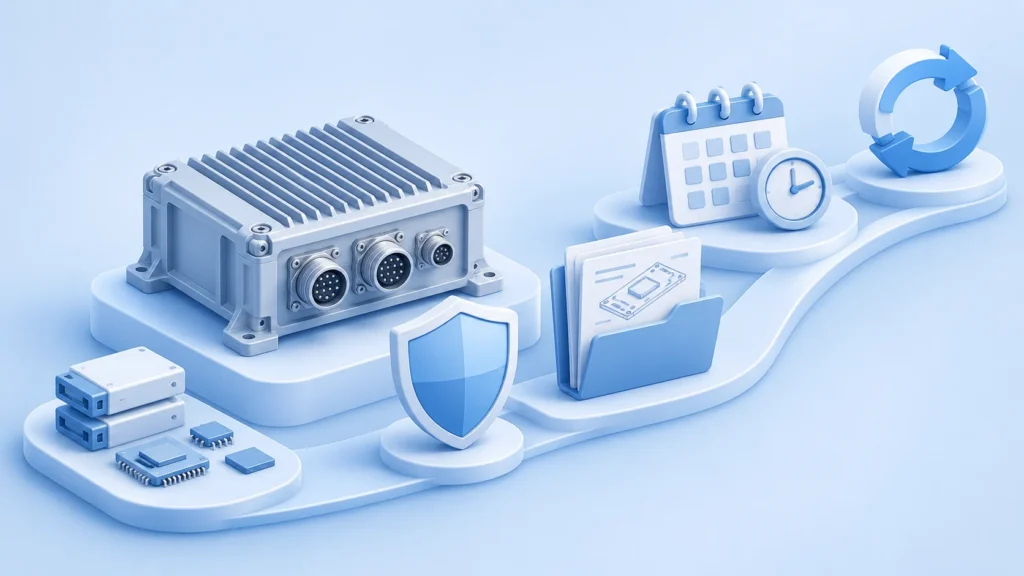
Commercial Off-The-Shelf (COTS) equipment can give Defence teams access to proven technology without commissioning a bespoke design. The purchase can be straightforward. Supporting it for 15 years may not be.
A manufacturer may withdraw a product, change a circuit board, stop issuing software updates or restrict access to repair data. Each change can affect Spares, Safety, Availability and cost, even when the equipment itself has worked reliably.
Before buying, teams need more than a price and warranty. We examine supplier commitments, repair rights, upgrade planning and who will manage Supportability throughout the service life.
A Commercial Product Has Its Own Life Cycle
The MOD Support Operating Concept supports COTS where possible and bespoke equipment where necessary. It recognises that rapid technology changes can make shorter replacement cycles sensible.
A 15-year Defence service requirement does not mean the original commercial product will remain on sale for 15 years. Buyers must judge whether the equipment can still be supported when the manufacturer moves on, and what that will cost.
Who Controls the Equipment After Purchase?
For a simple example, have you ever wondered why the McFlurry machine at McDonald’s always seems to be out of order? Even though franchise owners buy these machines outright, the manufacturer locks the diagnostic software behind proprietary passcodes, preventing staff from fixing minor glitches themselves.
Manufacturers may control repair instructions, diagnostic software, test equipment and rights to share technical data. Buying hardware does not automatically provide access.
A 2025 US Government Accountability Office report shows how gaps in technical data and data rights can limit maintenance options and increase dependence on original suppliers.
UK Defence buyers must ask whether their maintenance team can legally and safely repair and test equipment if its original supplier withdraws support.
Choosing a Support Route That Will Last
Support choices depend on the item, likely failures, supply lead times and replacement costs.
| Support Route | When It May Work | Main Trade-Off |
|---|---|---|
| Manufacturer Support | Service and parts terms are agreed | Dependence on the supplier |
| Strategic Spares | Critical parts may become scarce | Storage costs and ageing |
| Third-Party Repair | Data, tools and rights are available | Repair approval and quality |
| Planned Replacement | Product changes are expected | Testing, integration and cost |
A repair service at a UK depot may not meet the needs of equipment deployed overseas unless transport and turnaround times are covered. Routes can also be combined: limited stock may protect Availability while a replacement is tested. Our Critical Spares Planning article covers stock decisions in greater depth.
Upgrades Can Create New Support Problems
A newer unit is not necessarily a direct replacement. Firmware may alter an interface, affect Cyber Security controls or invalidate existing tests. Even a compatible-looking component may need integration checks, updated Technical Documentation and fresh Safety evidence.
Programme teams should decide who reviews product change notices, records the approved equipment configuration and authorises substitutions. These controls matter most when a COTS item is connected to other systems that cannot be changed as easily.
What Buyers Should Check Before Contract Award
Before contract award, turn support assumptions into commitments in the Support Plan:
- Agreed notice periods for product withdrawal and end of support.
- Defined spare part supply and repair response times.
- Access to the technical data, licences and tools maintainers need.
- A funded route for testing and approving replacements.
- Named responsibility for Obsolescence reviews and supplier changes.
Some risk remains. Buyers should know who owns it and what response is possible if supply changes. Our Single-Source Risk article explores critical supplier dependencies.
Planning Long-Term COTS Support With Quorum
At Quorum, we use Supportability Analysis, Supply Support, Obsolescence Management and Technical Documentation to help Defence teams connect procurement decisions with maintenance and support needs. Our engineers work within client project teams to assess what support arrangements will work in practice.
Our Miller Industries case study shows how we helped bring commercial towing equipment into Defence through Supportability Analysis, Supply Support, Reliability and Maintainability work and Technical Documentation.
Frequently Asked Questions
Can COTS Equipment Remain in Defence Service for 15 Years?
Yes, but it needs a support plan that accounts for product withdrawal, changing parts and potential upgrades. A 15-year service life does not mean every original component will remain available for the same period.
Can a Supplier Guarantee COTS Spare Parts for 15 Years?
Some suppliers offer long-term support agreements, but the scope matters. Buyers should check which parts are covered, delivery terms, exclusions, notice periods and what happens if the manufacturer discontinues the product.
Does Replacing a COTS Component Require Further Testing?
It depends on the change and how the component is used. A different part or firmware version may affect interfaces, Safety, Security or performance, so the programme should assess the impact before approving it for service.
Who Should Manage COTS Obsolescence After Contract Award?
The contract and Support Plan should make responsibility clear. Depending on the delivery model, the equipment owner, prime contractor or support provider may monitor supplier notices and propose solutions, with changes approved by the appropriate authority.
If you are assessing a COTS purchase or reviewing an existing Support Plan, contact our team to discuss the support risks worth resolving before they become costly.


