
To Finish First, First You Must Finish: Endurance Racing Reliability
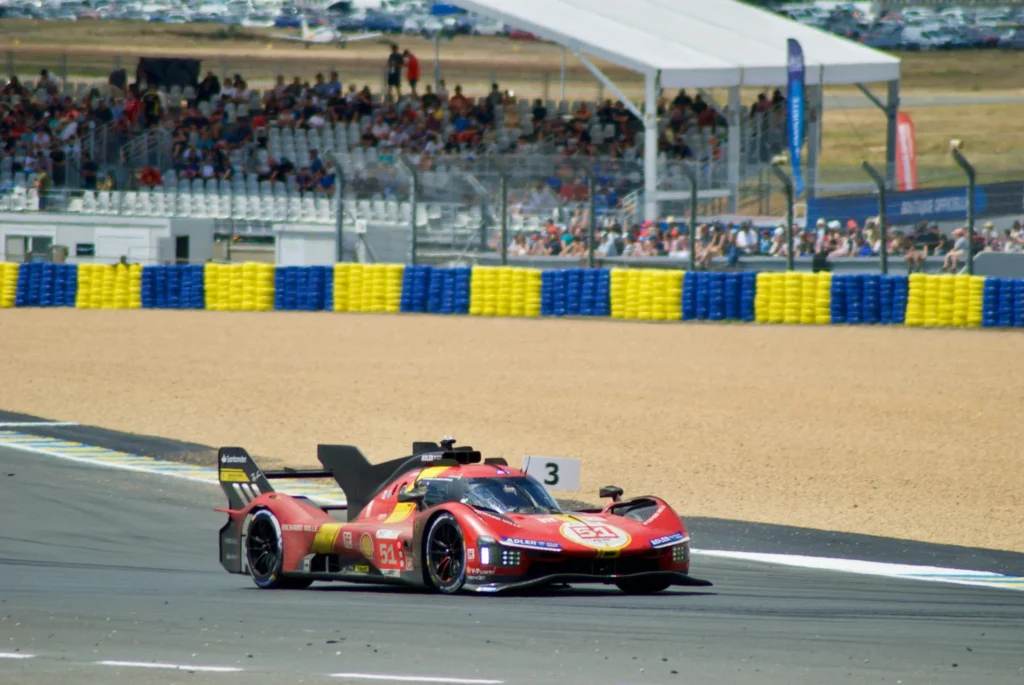
Endurance racing asks a simple but demanding question: can a car, its drivers and the team supporting them maintain competitive performance for an entire race without a failure taking them out of contention?
Endurance racing reliability turns speed into results by keeping the car, crew, data and Support Plan working together for every lap, pit stop and change in conditions.
At Quorum, we have over 26 years of Support Engineering experience to help organisations understand failure risk, improve Availability and plan how complex systems will be maintained throughout their working lives. While endurance racing and Defence operate in very different settings, both depend on sound preparation, clear data and systems that continue to perform when placed under sustained pressure.
Le Mans Shows How Small Reliability Gains Decide Major Races
The 2026 24 Hours of Le Mans showed just how narrow the margin between winning and finishing second can become. After 24 hours and 381 laps, the #7 Toyota crossed the line only 10.913 seconds ahead of the #20 BMW. Seven Hypercars completed all 381 laps, meaning several leading teams remained within a single lap of victory at the end of the race.
Toyota’s winning GR010 Hybrid was driven by Mike Conway, Kamui Kobayashi and Nyck de Vries. It was Toyota’s sixth overall Le Mans win and its first since 2022. The result was far from straightforward. The #7 car suffered a slow puncture early in the race and later faced a Driveshaft Sensor issue, but the team kept the car in contention and recovered as the race developed.
When the final gap is less than eleven seconds, every delay matters. An extra inspection, a slow repair or a fault that forces the car into the garage can remove any chance of victory. Reliability does not simply mean avoiding retirement. It means limiting the small losses that build across a long race.
If you missed the race, here are some highlights:
Race Highlights | 24 Hours of Le Mans 2026 | FIA WEC
Reliability Is More Than Building a Strong Car
A reliable race car is not simply one fitted with strong parts. The whole vehicle must work as a connected system. The engine, Hybrid System, Gearbox, Suspension, Brakes, sensors, software and cooling systems must all perform under heat, vibration, repeated loads and changing track conditions.
Teams must also understand how parts degrade. A component may complete one fast lap without trouble but behave very differently after hours of hard use. Reliability and Maintainability work helps teams assess likely failure points, decide what needs monitoring and determine when a part should be inspected or replaced.
The main areas include:
- Failure risk
- Component life
- Heat control
- Sensor health
- Software stability
- Repair access
- Spares Planning
- Maintenance time
A fast car that cannot complete the race has little value. A car that is reliable but too slow will also struggle to win. The real task is to find the right balance between performance, weight, component life and ease of repair. That balance must be considered during design rather than left until the car reaches the circuit.
The Race Is Supported Long Before the Starting Flag
Endurance racing reliability begins months before the event. Engineers study past failures, test parts under repeated loads and use race data to understand how the car behaves over long periods. Teams also practise pit stops, driver changes and repairs so that each task can be completed quickly when the pressure is highest.
This preparation is similar to Supportability Analysis. Teams must identify what could fail, what effect the failure would have and how the problem could be detected. They must then decide whether the risk should be removed through design, controlled through maintenance or managed through an operating procedure.
Technical Documentation is another key part of that support system. Mechanics need clear information about inspection limits, repair steps, settings and replacement parts. The pit crew must know which tools are required and where each Spare is stored. Engineers need reliable data so they can tell the difference between an unusual reading and the first sign of a serious fault.
None of this work attracts the same attention as an overtake for the lead. Yet when a fault occurs at three o’clock in the morning, the quality of the support plan can decide whether the car loses seconds, laps or the entire race.
Maintainability Can Be as Important as Reliability
No team can remove every risk from a 24-hour race. Parts wear, cars make contact and unexpected faults occur. The next question is therefore not only whether something will fail but how quickly the team can diagnose and correct the problem.
Maintainability considers how easily a component can be inspected, reached, removed and replaced. A repair that takes four minutes rather than twenty can preserve a car’s chance of a strong finish. This makes access, fasteners, connectors, tools and fault data part of race performance, even though none of them improves outright lap speed.
The 2026 race gave a clear example of the cost of lost operating time. The #38 Cadillac remained in the fight for the lead until a Power Steering problem cost it seven laps around the halfway point. The car later retired. By contrast, the winning Toyota recovered from its puncture and sensor issue without losing touch with the leading group.
A system does not have to be fault-free to remain effective. It needs faults that can be detected early, understood correctly and managed within an acceptable time. Good Maintainability gives the team more ways to recover when events do not follow the plan.
Human Factors Helps Turn Reliability into Race Performance
The car may be the most visible part of an endurance racing team, but its performance still depends on people working under pressure. Drivers must notice and report changes in handling, braking or power delivery. Engineers must interpret live data quickly while mechanics carry out complex tasks during long shifts and overnight running.
As an ILS discipline, Human Factors looks at how people interact with equipment, information, procedures and the working environment. In endurance racing, this can include cockpit layout, warning systems, repair access, tool design, team communication and the way technical data is presented. A poor interface or unclear instruction can delay a response even when the fault itself is minor.
Human Factors also considers workload, fatigue and the chance of Human Error. Pit crews and engineers must make fast choices when information is limited and the cost of delay is high. Clear roles, practised procedures and well-designed tasks help reduce that risk.
Use Quorum for Reliability and Through-Life Support
The lessons from endurance racing apply to many complex systems. Defence equipment, energy assets, transport systems and secure communications must often remain available for long periods in difficult conditions. A small failure can affect output, safety, cost or the success of a wider operation.
Quorum helps organisations address these risks through Reliability and Maintainability, Supportability Analysis, Spares Planning, Obsolescence Management, Human Factors, Training Needs Analysis, Technical Documentation and wider Support Engineering. We help clients identify where failure risk sits, how maintenance will be delivered and what support resources will be needed throughout the system life.
The aim is not simply to react faster when something breaks. It is to make better choices early, when the design, support plan and supply route can still be shaped. This may involve improving access to key parts, reviewing maintenance tasks, assessing Spare demand or creating clearer technical information for users and maintainers.
Book an informal chat with Shaun for a free consultation and discover how ILS can propel your operational efficiency and cost-effectiveness to new heights.
Your support engineering insights…


