
Supportability Engineering for Wind Farms: Reducing Downtime
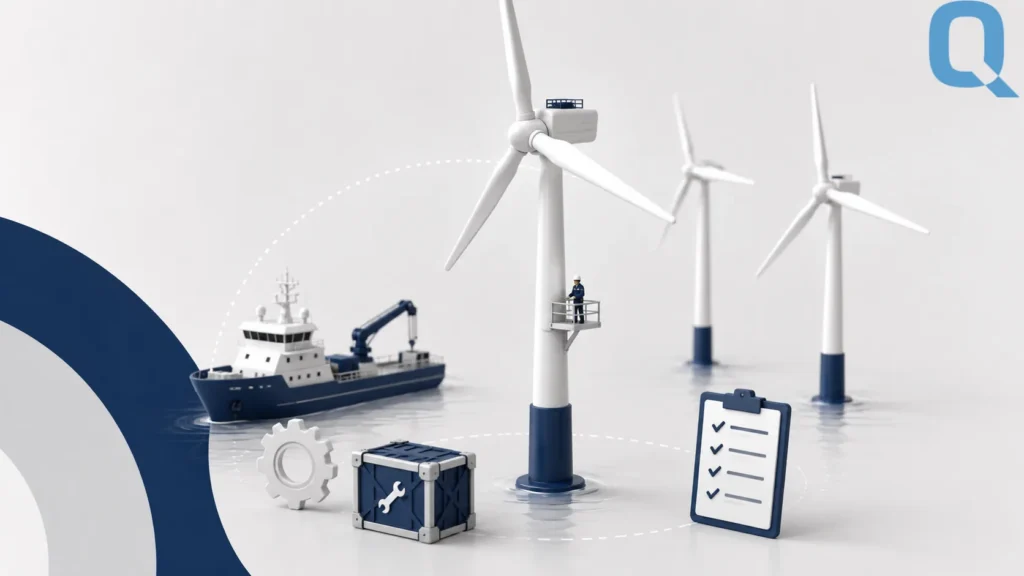
Renewable Energy is a high-value sector built on complex assets, harsh sites and long service lives. That means it also requires extensive Support Engineering. supportability engineering for wind farms: reducing offshore downtime? It starts with planning how assets will be accessed, maintained, repaired and kept available.
Supportability Engineering helps Wind Farms cut downtime by planning maintenance, Spares, access, Training and Technical Documentation before faults become costly delays.
Quorum has over 26 years of experience in Support Engineering, with proven methods shaped in Defence and applied to complex assets across other sectors. That experience is highly relevant to Renewable Energy, where asset uptime, safe access and through-life cost control all matter.
Quorum Supports Renewable Energy
At Quorum, we are not limited to Defence. The same thinking that keeps complex Defence systems available can help Renewable Energy teams manage Wind Farm Reliability, Maintainability and support risk.
Quorum has collaborated with Keele University’s Smart Energy Network Demonstrator on wind farm research, looking at the Engineering impacts of Reliability and Maintainability. The project explored how ILS thinking could support better decisions around Wind Farm Supportability, Whole Life Cost and future maintenance risk.
For Wind Farm teams, that means Quorum can bring clear, structured thinking to problems that are often treated as purely operational. We help ask the right questions early: what might fail, how easy will it be to fix, what data is needed, what Spares should be held and how can downtime be reduced before it hits output?
Why Offshore Downtime Is So Costly
A fault onshore can often be reached by road. Offshore, the same fault may need the right vessel, trained crew, safe weather window, approved access route, correct Spares and clear maintenance instructions.
That makes downtime more than a technical issue. It becomes a logistics issue, a planning issue and a cost issue. A missing part, unclear Technical Documentation or poor access plan can turn a small repair into days of lost production.
Supportability Engineering helps reduce this risk by looking at the full Support Solution. It connects design, maintenance, Spares Planning, Human Factors, Training Needs Analysis and Obsolescence Management so that the asset is easier to support once it is live.
What ILS Can Teach Wind Farm Operators
Integrated Logistic Support was built for complex systems where failure is expensive and access is limited. That makes it a strong fit for offshore Wind Farms.
In Renewable Energy, ILS thinking can support:
- Maintenance planning
- Spares forecasting
- Technician Training
- Vessel planning
- Technical Documentation
- Reliability data
- Obsolescence risk
- Disposal planning
The value is in joining these points together. A maintenance plan is weaker if it ignores Spares. Spares Planning is weaker if Reliability data is poor. Technical Documentation is weaker if it does not match real tasks. ILS helps Wind Farm teams build a Support Solution that works as one system, not a set of separate parts.
Planning Support Before The Turbine Is In Service
Supportability Engineering helps teams challenge those issues early. Can the part be reached safely? Can it be changed within the expected weather window? Is special tooling needed? Are maintainers trained for the task? Is the repair clear in the Technical Documentation? Is the component likely to become obsolete during the asset’s life?
These are simple questions, but they can prevent expensive problems. By testing support assumptions before service begins, Wind Farm operators can reduce avoidable downtime and build more realistic Operations and Maintenance plans.
Turning Support Data Into Better Decisions
Wind Farms create large amounts of data, but data alone does not reduce downtime. The value comes from knowing which data matters, how it links to failure risk and how it should shape maintenance choices.
Supportability Analysis can help teams make better use of asset data. It can show which failures cause the most disruption, which parts need stronger Spares Planning and where maintenance tasks could be grouped to reduce offshore visits.
This is where Defence-style Support Engineering can help Renewable Energy. The aim is not to add paperwork. The aim is to make decisions easier, clearer and better backed by evidence. That helps operators plan work, manage risk and protect output across the life of the Wind Farm.
Reducing Downtime Starts With Better Support Thinking
Offshore Wind Farms are built to generate clean energy, but their performance depends on more than turbine design. They also need a Support Solution that can cope with distance, weather, access limits, supply chains and changing technology.
Supportability Engineering helps bring those factors into the plan early. It gives operators and Engineering teams a practical way to reduce risk, manage cost and keep assets available for longer.
For Wind Farm owners, developers and operators, this is where Quorum can help. We bring proven Support Engineering and ILS thinking to Renewable Energy, helping teams improve Reliability and Maintainability, plan Spares, shape Technical Documentation and reduce offshore downtime through better support planning.
Book an informal chat with Shaun for a free consultation and discover how ILS can propel your operational efficiency and cost-effectiveness to new heights.


